

The Fare Has Been Paid. Can the Operator Buy Fuel?
A passenger taps a card, receives confirmation and boards, but the operators need to know they'll have money for the next journey.
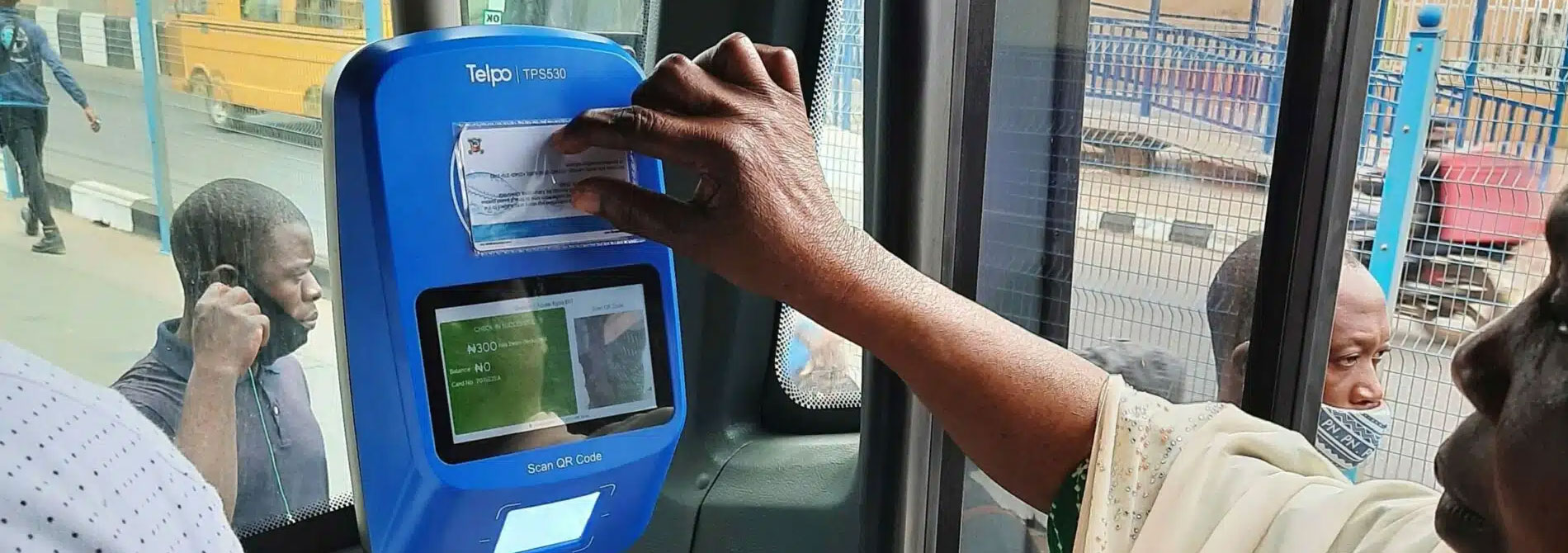
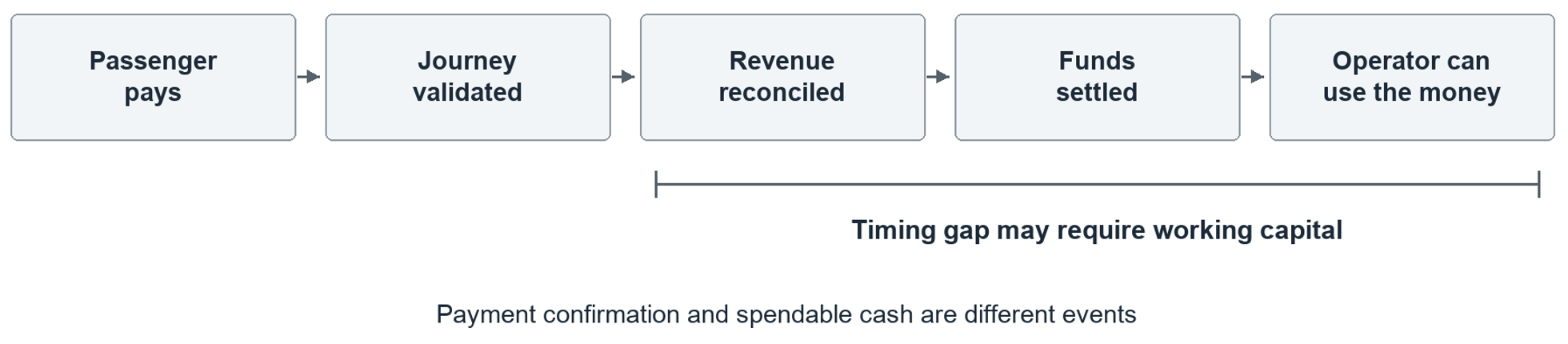
A passenger taps a card, receives confirmation and boards. From the passenger's perspective, payment is complete.For the vehicle operator, the important question may still be unanswered: when will the money be available to pay for the next journey? The distinction between a recorded fare and usable cash sits at the centre of transport payment design. A system can process transactions correctly while leaving the operating business short of funds at precisely the wrong moment.
This matters wherever daily revenue finances daily service. Fuel, crew payments and small repairs cannot always wait for a settlement cycle designed around a different kind of merchant. Moving from cash to digital collection changes the timing and control of money, even when the fare and vehicle remain the same. Modernisation therefore needs to account for the operator's cash cycle as carefully as it accounts for the passenger's payment experience. Otherwise, an improvement at the validator can become a constraint at the depot.
The Challenge
System should improve visibility, but also need to introduce a funding interval.
Consider an illustrative operator that collects fares throughout the morning and purchases fuel before its afternoon service. Under cash collection, that sequence may be immediate, although poorly recorded and exposed to leakage. Under a digital arrangement, the same revenue may pass through a collector, processor and settlement bank before reaching the operator. The system has improved visibility, but it has also introduced a funding interval. Someone must finance that interval or change the operating schedule.
The interval is not necessarily a defect. Central collection may provide useful controls, and a predictable settlement timetable may be preferable to uncertain cash receipts. The problem arises when the parties have not priced or funded the change. A driver who previously paid expenses from the day's proceeds may be instructed to stop handling cash without receiving a workable alternative. Resistance then appears to be opposition to technology when it is partly a response to an unresolved operating need.
Exceptions can be more disruptive than the normal cycle. A missing trip record, disputed allocation or reconciliation difference may delay payment for otherwise valid services. If the contract allows an entire settlement to be withheld because a small portion is contested, the operator can absorb a disproportionate shock. The design needs to distinguish confirmed amounts from disputed amounts and provide a clear process for resolution. Precision in these arrangements matters more than an optimistic promise of frictionless payments.
Passengers can ultimately bear the consequences through cancelled trips, demands for a second payment or pressure to return to cash. These outcomes damage trust in the whole programme, including institutions that do not control settlement. A transport payment system therefore has several customers: the traveller, the operator, the authority and the financial institutions maintaining it. Their needs overlap, but they are not identical. A design that optimises one experience while ignoring the others remains incomplete.
Our Approach
The answer is in understanding how money actually moves through a normal operating day.
Adecore begins with a map of how money actually moves through the operating day. The assessment identifies when fares are earned, when payments become final, when funds become available and when expenses fall due. It also identifies which party controls each stage. This creates an evidence-based picture of the working-capital requirement rather than assuming that digital revenue is immediately spendable. Existing cash handling should be examined with equal care so its real costs and risks remain visible.
The next step is to compare settlement options against that operating picture. More frequent settlement, agreed advances or separate expense arrangements may be relevant, but each introduces costs and responsibilities. The purpose is to identify a sustainable structure with the appropriate financial partners, not to promise that technology removes the need for working capital. Any credit element requires a separate assessment of affordability, repayment, authority and applicable financial requirements.
Governance then translates the structure into clear rules. Operators should understand how their earnings are calculated, which deductions apply and how to challenge a discrepancy. The collector should know the evidence required to release funds and the permitted response to incomplete data. Escalation should reach someone able to resolve the issue within a timeframe that reflects service needs. A technically accurate reconciliation process can still fail operationally if no one owns urgent exceptions.
The reconciliation design should identify the unit at which a difference is investigated. A vehicle, route, shift or individual transaction may be the appropriate starting point, depending on the operating model. Aggregated totals can conceal a recurring problem affecting one operator. Conversely, reviewing every transaction manually can overwhelm the team. A proportionate process uses agreed thresholds and patterns to direct attention, while preserving a route for smaller participants to raise a concern that is material to them even if it is immaterial to the overall scheme.
Impact measures should follow the same logic.Payment success rates matter, but so do settlement predictability, time spent resolving differences and services lost because funds were unavailable. Human impact appears in passenger continuity and crew confidence. Economic impact appears in the cost of financing the operating cycle. Institutional impact appears in a record that all accountable parties can understand. These measures help determine whether the new arrangement is improving the transport business rather than merely changing its payment channel.

Adecore Insight
Our objective was to observe the relationship between confirmed revenue, usable balances and actual expenditure.
A useful pilot follows several operators through complete operating and settlement cycles, including weekends, holidays and disrupted services where relevant. The objective is to observe the relationship between confirmed revenue, usable balances and actual expenditure.A demonstration involving a few successful taps cannot answer these questions.The pilot should include the finance staff and operating personnel who will handle ordinary exceptions after the launch team leaves.
The contract should also explain what happens during a system outage. An alternative collection method may preserve service, but it creates a second stream of records and money that must later be reconciled. Authority to activate that method, communicate with passengers and return to normal operation should be explicit. The organisation should rehearse the process so continuity does not depend on improvised decisions made under pressure.
Transparency should be practical rather than decorative. An operator needs a statement that connects journeys, fares, adjustments and net settlement. A complicated report that requires specialist interpretation may satisfy a reporting obligation while failing to build trust.Where records disagree, the explanation should be traceable to a specific event or rule. This makes learning possible and reduces the temptation to resolve recurring differences through informal arrangements outside the system.
Financing should not conceal weak economics. If an operator consistently needs borrowing because the service loses money, faster settlement alone will not solve the problem. Conversely, a viable operator may experience a temporary liquidity gap because the collection model changed. The distinction determines the appropriate response.Intelligence is useful when it separates a timing problem from a profitability problem and prevents a payment programme from treating both as a need for more credit.
Timing commitments should be expressed in terms operators can use. A statement that funds are processed daily may refer to an internal calculation rather than availability in the receiving account.The agreement should distinguish those events and explain cut-off times, exceptions and the treatment of non-business days. Testing the promise through an actual operating cycle is more valuable than comparing terminology across provider brochures. The relevant outcome is whether the operator can plan expenditure with justified confidence.
The final test is whether the next service can operate reliably under the new arrangements. A digital fare is valuable evidence, but it becomes useful operating income only through a complete financial process. Designing that process well protects the passenger experience and the operator's viability together. It also leaves the institutions involved with a clearer understanding of the responsibilities behind every apparently simple tap.