
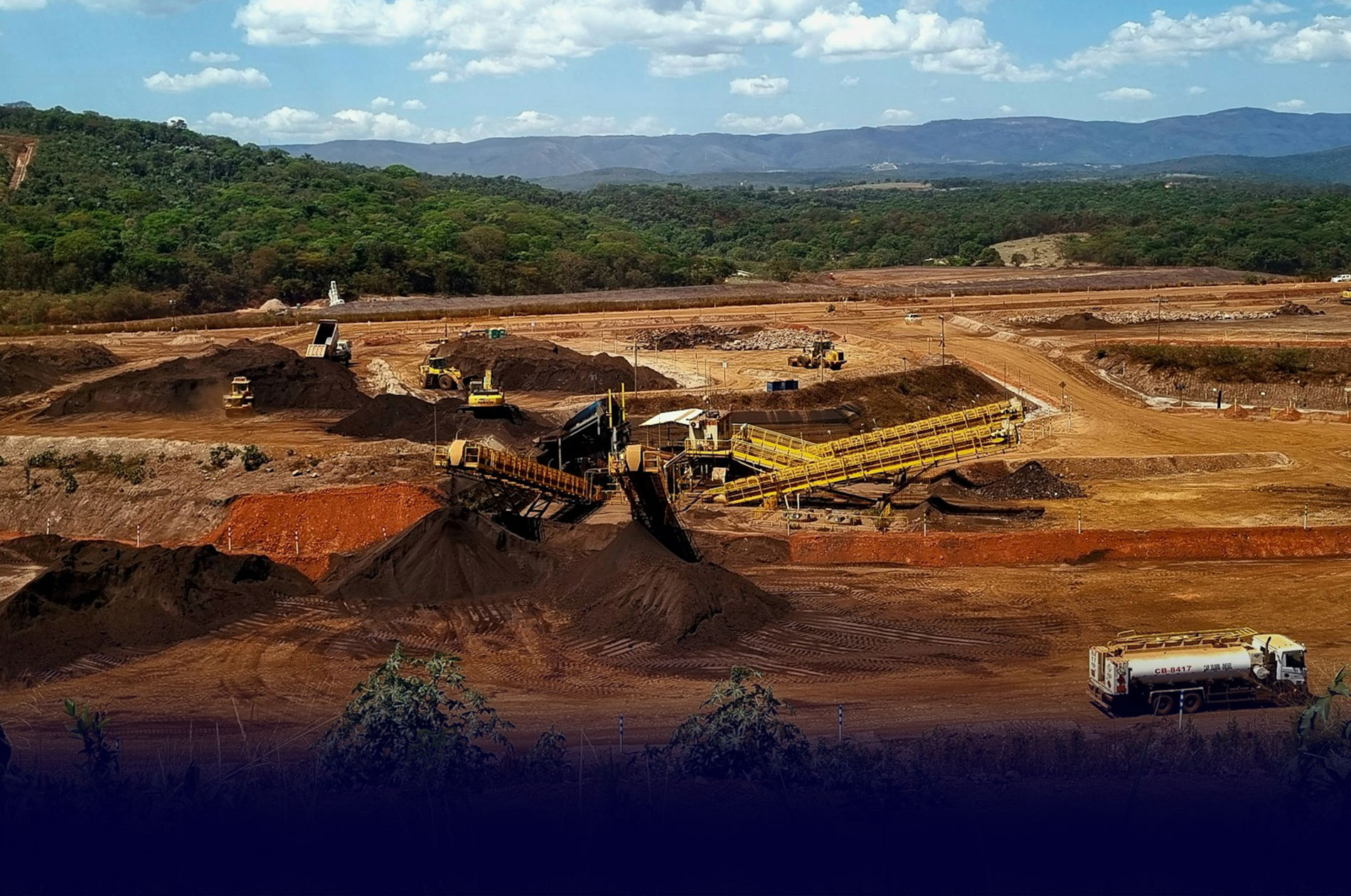
Entering African Mining: The Investment Case Beyond the Deposit
A mineral deposit may explain why an investor becomes interested in a country. It does not, by itself, explain how a mining business will succeed there
Between geological potential and a functioning operation sit legal rights, infrastructure, capital, management and relationships with the people and institutions whose cooperation the project requires.
For investors and strategic partners entering African mining, the central task is to understand how those elements fit together in a particular place. The opportunity may lie in exploration, production, processing, services or supporting infrastructure. In every case, commercial promise depends on the practical conditions under which it can be realised.
The investment narrative should therefore describe a sequence rather than a destination. A presentation may show a future mine with stable production, established customers and trained local teams.Investors still need to understand how the project will move from its present condition to that future, and which dependencies could interrupt the journey.The difference between an ambition and an investment proposition lies in the evidence supporting each transition and the resources required to make it happen.

The Challenge
Early geological indications can also be presented with a confidence that the underlying work does not yet justify.
Africa contains distinct mining jurisdictions and operating environments. A proposition that appears compelling at a regional level can change materially when tested against local permitting, fiscal conditions, power availability, transport costs or community expectations. Early geological indications can also be presented with a confidence that the underlying work does not yet justify.
Partnerships introduce another layer of uncertainty. Access, technical capability, funding and operating responsibility may sit with different parties whose expectations have never been properly aligned. When infrastructure assumptions remain incomplete or stakeholder concerns are addressed late, the investment case can unravel well beyond the deposit itself.
Consider a hypothetical project with encouraging technical results and an apparently economical processing route.Its preferred power connection depends on an upgrade outside the project company's control. The model assumes the connection will be available before commissioning, while the construction plan treats it as someone else's responsibility. The weakness is not necessarily the deposit or even the proposed power solution. It is the ungoverned dependency between two programmes operating to different priorities.
Similar gaps can emerge around land access, water availability, port capacity or specialist personnel. A commitment in principle is not the same as capacity available on the required date. Investors should distinguish access discussions, formal agreements, funded delivery plans and operational availability. Conflating these stages can create confidence in an integrated project when the underlying parties have not yet committed to an integrated timetable.

Our Approach
We connect strategic intelligence with an assessment of rights, partners, infrastructure, commercial assumptions and execution capability.
Adecore examines the opportunity within its actual operating environment. We connect strategic intelligence with an assessment of rights, partners, infrastructure, commercial assumptions and execution capability. Evidence gaps become explicit decision requirements, while the proposed capital structure is tested against what must happen next and who will be responsible.
Our framework also asks what a better outcome would mean for the host economy and its people. Employment, supplier participation, institutional capability and resource stewardship should influence project design from the beginning. We then align governance, expertise and delivery around those intended outcomes, with measures that can show whether they are being achieved. Market entry becomes a pathway towards a viable operation and enduring local capability.
A practical entry assessment should show what can be controlled directly, what depends on contracted counterparties and what remains exposed to wider conditions. Those distinctions shape both the commercial structure and the contingency plan. An external dependency cannot be managed by assigning an internal name to it alone. The owner needs the authority, information and contractual or institutional relationship required to influence the outcome or develop a credible alternative.
The entry roadmap should also specify the point at which the team returns to the board for a new mandate. This prevents a limited authorisation to investigate from gradually becoming an unexamined commitment to develop.
The first distinction is the project's position in the mining lifecycle. Exploration, resource definition, feasibility, construction and production require different evidence and different forms of capital. An exploration licence does not establish an operating mine, and a resource estimate does not establish an economically recoverable reserve. Confidence should reflect the maturity of the work already completed.
Rights require equally precise examination.Investors need to understand the licence holder, the permitted commodities and area, validity, obligations, encumbrances and authority to transact. Corporate ownership and contractual arrangements must support the proposed partnership. A compelling relationship cannot resolve an uncertain legal position.
Stakeholder engagement should produce usable intelligence as well as relationships. Questions about employment, land, procurement and environmental effects reveal expectations that may differ from the project team's assumptions. Recording these differences early allows the project to adjust its design and commitments. It also helps avoid promises made informally by intermediaries becoming perceived obligations that the operating company has neither budgeted nor authorised.
Adecore Insight
The operating assessment then moves beyond the licence boundary.
The operating assessment then moves beyond the licence boundary. Power, water, roads, equipment, contractors, skilled people and an achievable route to market all affect whether the project can function. Their availability, cost and timing must be reflected in the commercial model. Community relationships also require sustained attention: commitments should be understood, responsibilities assigned and concerns addressed while decisions can still influence the project.
Partner quality becomes visible when contributions are made specific. Each party should be clear about what it brings, what it controls and what it is expected to deliver. Decision rights, performance expectations and mechanisms for resolving disagreement need to be agreed before pressure exposes the gaps. Management capability deserves the same scrutiny as financial capacity.
Capital can then be released against meaningful decision gates, such as improved resource confidence, completed studies, permits or development milestones. Each commitment should purchase a defined advance in readiness. At those gates, Adecore's impact framework also tests whether the project is supporting people's safety and opportunity, creating durable economic participation, strengthening accountability and managing environmental consequences. Those outcomes require evidence alongside financial progress. The quality of market entry is ultimately revealed in the operation that follows and the capability that remains in the institutions and communities around it.
Market entry should be tested under disruption, not only under the base case. What changes if commissioning slips, the route to market becomes more expensive or the expected partner contribution arrives late? The purpose is to identify practical responses and the point at which the investment case needs reconsideration. A contingency that depends on new funding should identify a plausible source and the conditions under which that funding might be available.
Local participation deserves the same commercial precision. A supplier-development ambition becomes credible when it identifies the goods or services required, qualification standards, training needs, payment terms and purchasing horizon. Counting locally registered suppliers alone may reveal little about capability created. Better evidence includes whether suppliers can meet quality requirements, win repeat work and remain viable beyond one contract. These outcomes should influence procurement design without concealing cost or performance trade-offs.
The entry decision should end with a defined next stage rather than an unrestricted endorsement of the whole project.Decision-makers can authorise a study, negotiate a partnership or fund an agreed milestone while reserving later commitments for stronger evidence. This protects capital and gives the project team a clear mandate. It also creates a disciplined opportunity to revisit human and environmental consequences before decisions become difficult or expensive to reverse.